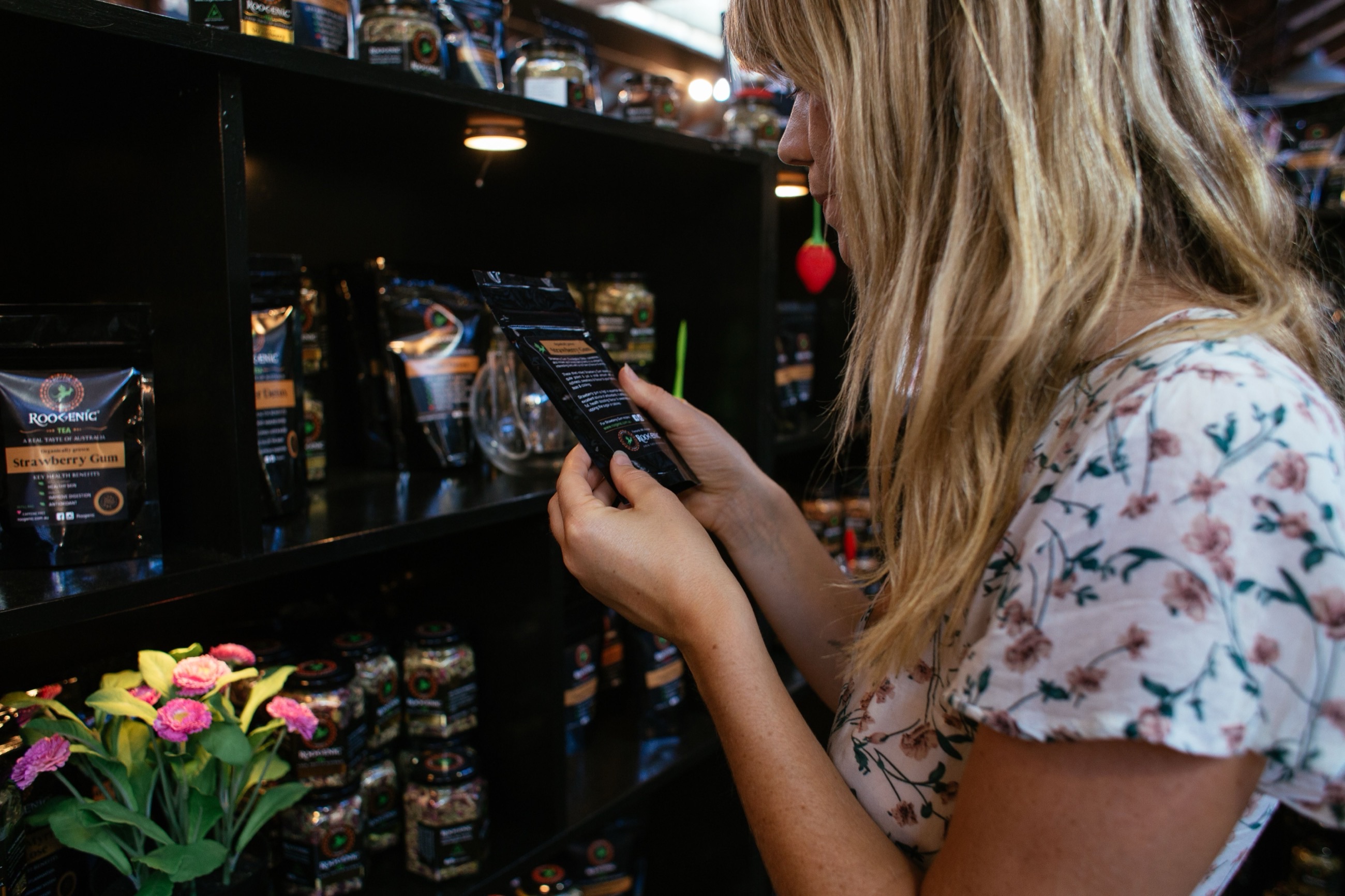
A shopper reading the label on a packet in a shop

Know what’s in your food, before you buy it.

Point your phone at any packet, the barcode or the ingredients list, and get one clear score right there in the shop. No internet needed.

Download for Android
Free & open sourceWorks fully offlineMade for India
5,458Indian products, bundled offline
0-10One score, every reason shown
5Regulators cross-checked
0Data ever collected
The idea

Everything is already printed on the packet, in tiny letters and codes you can’t make sense of. OpenLabel reads it for you, and flags the additives that are banned abroad but still sold here. You see the reasons, not just a number.

The score

One number. Every reason shown.

Every product gets a score from 0 to 10, worked out from fixed rules you can check. Every point, up or down, tells you which ingredient caused it.

0
4
7

Good choice

7.0 – 10

Lightly processed, and easy on sugar, salt and fat. Buy it without a second thought.

Think twice

4.0 – 6.9

A mixed bag. High in something, or it carries an additive worth a closer look. Okay once in a while.

High concern

0 – 3.9

Heavily processed, or it carries an additive that’s banned or restricted in other countries. Keep it for the odd treat.

The watchlist

Legal here.
Pulled abroad.

Some additives still on sale in India have been banned or restricted in other countries. OpenLabel names each one, the country, and the year. Your packet will not tell you any of this.

How the check works
A few examples
Titanium dioxideE171EU · banned since 2022

A whitener in sweets, chewing gum and icing.

Potassium bromateEU, UK & Canada · banned

A flour treatment used in some breads and bakes.

Brominated vegetable oilBVOEU banned · US revoked 2024

An emulsifier once common in citrus sodas.

Allura RedE129EU · warning label required

A synthetic red colour in drinks and sweets.

Plus many more. None of it is flagged on the packet in India.
How it works

From shelf to decision in one scan.

Point, read, decide. No tiny print to squint at, no confusing codes, and nothing leaves your phone.
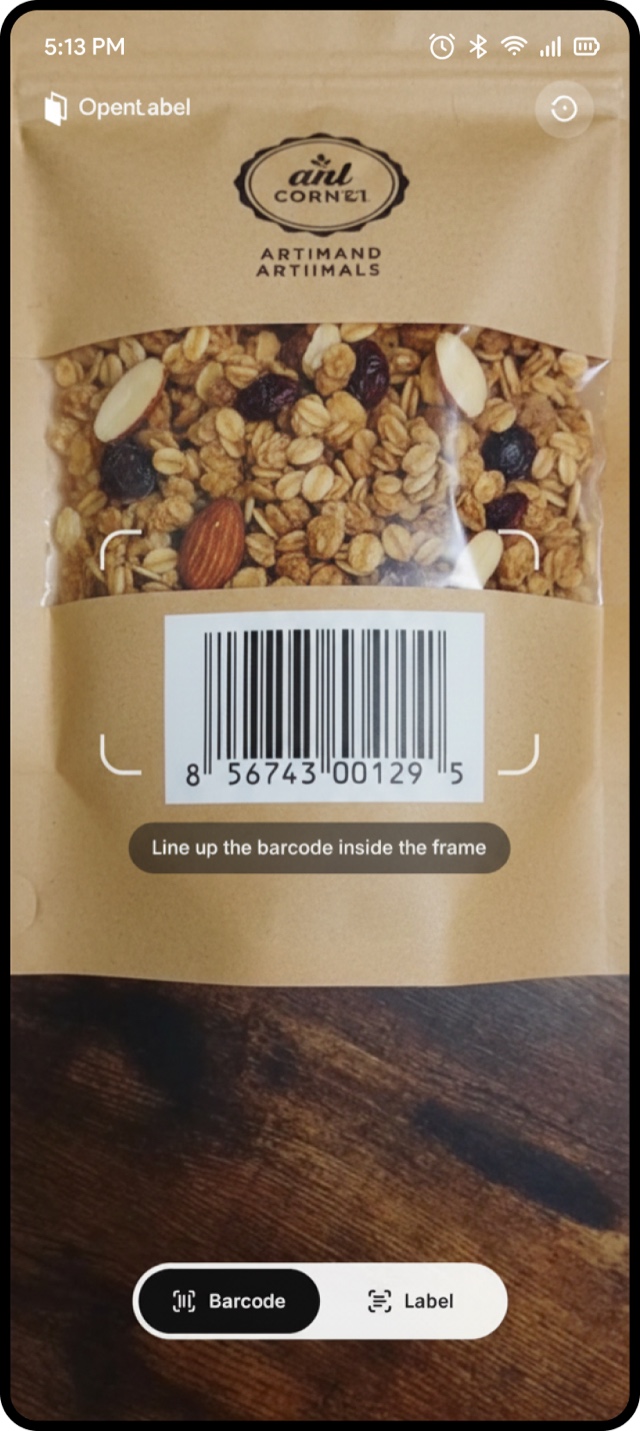
Scan the label
01

Scan the label

Point at the barcode, or let the camera read the ingredients list. Both work without internet.
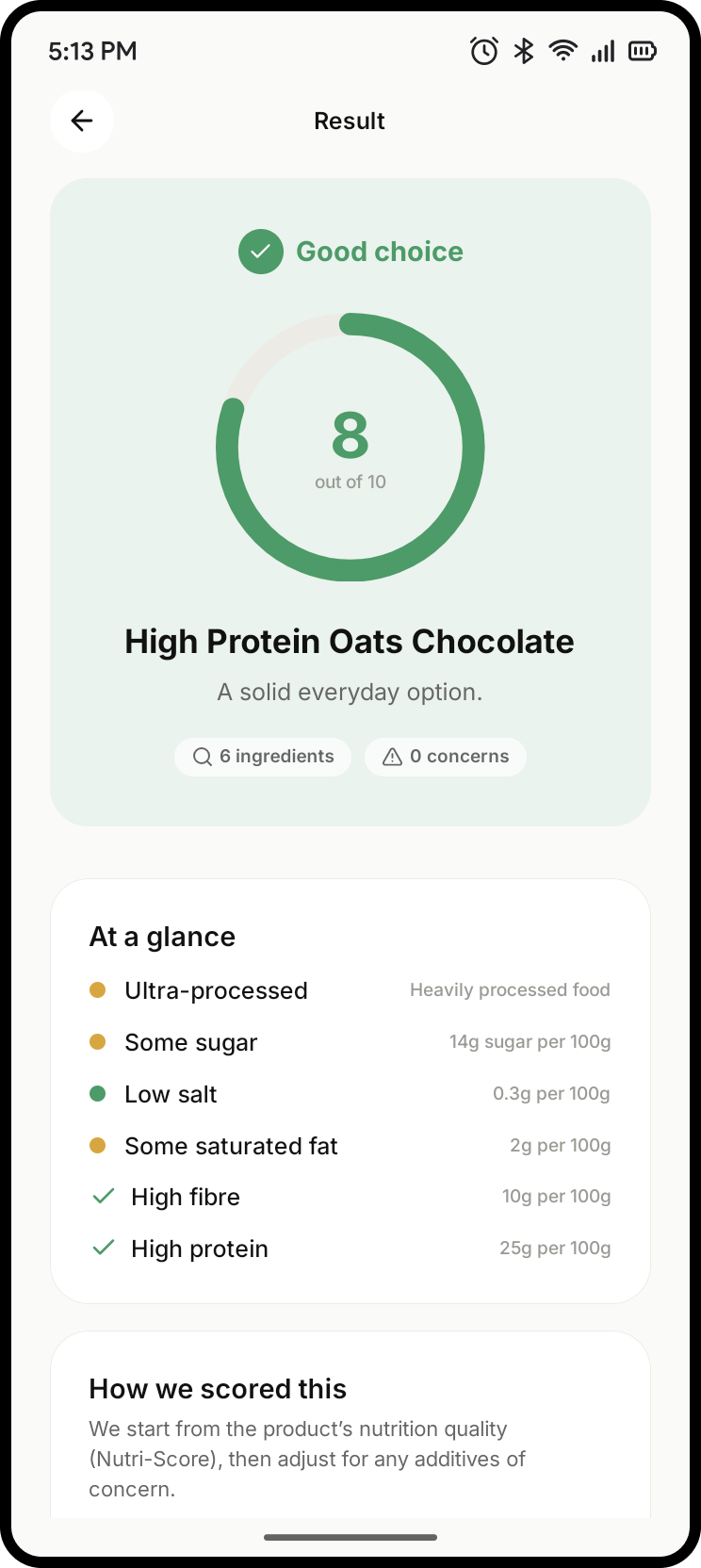
Read the score
02

Read the score

You get one number out of ten, based on the Nutri-Score method used across the EU.
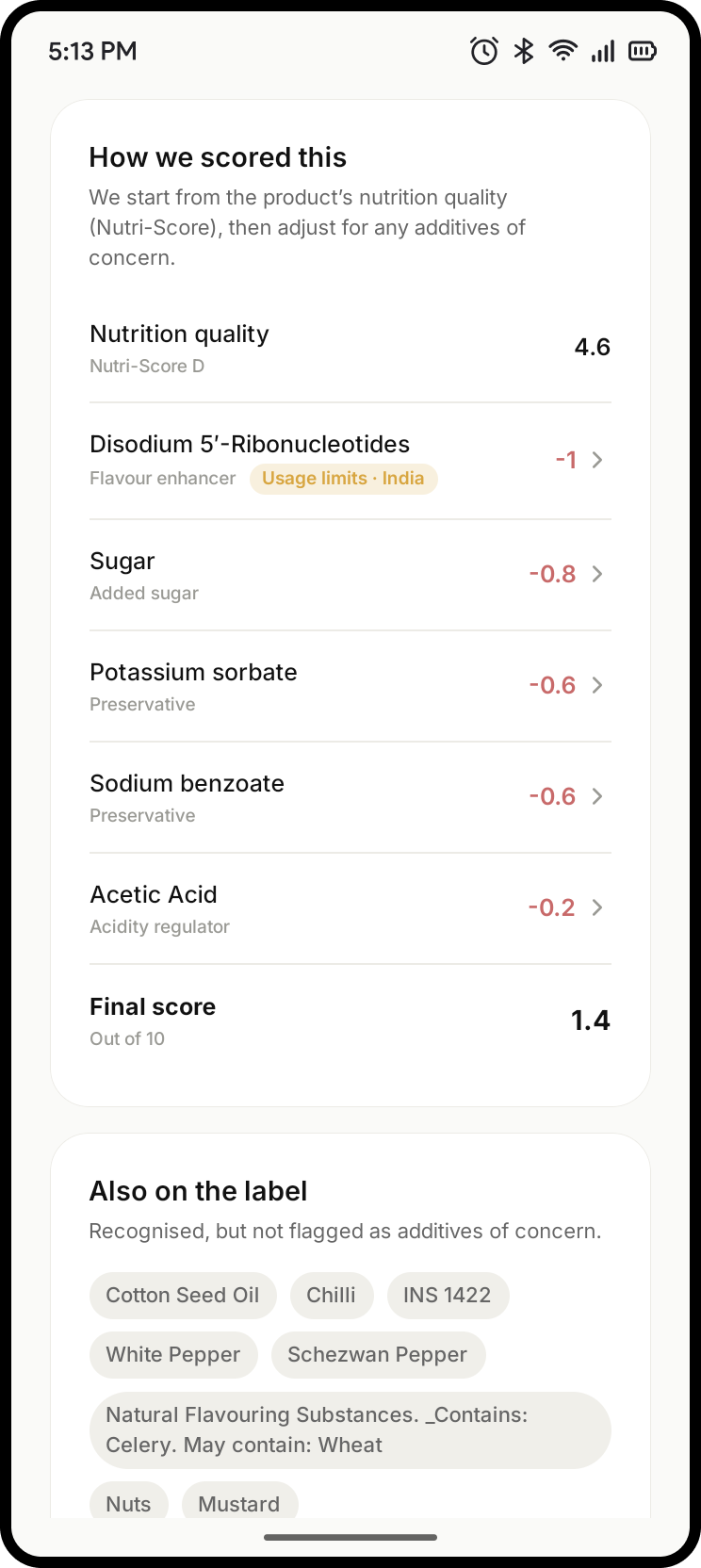
See every reason
03

See every reason

Every point, up or down, tells you which ingredient caused it. Nothing is hidden.
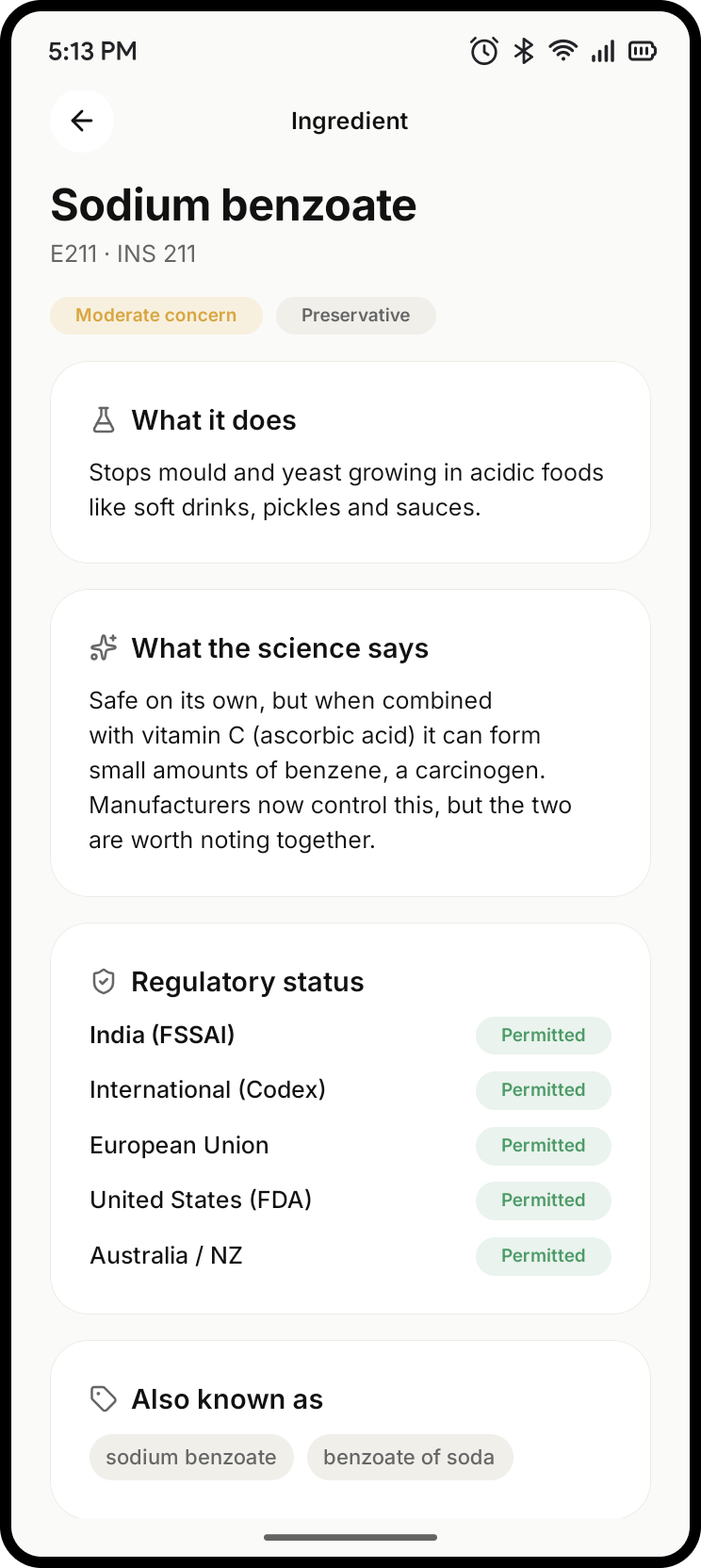
Understand any additive
04

Understand any additive

Tap any additive to see what it is, what it does, and where it is banned or restricted.

How it’s different

Clear, honest, and on your side.

Typical scanners
Scoring Fixed rules, every point explained A hidden formula you can’t check
Works offline Reads the label on your phone Needs internet to look up
Global context Names the country that banned it Nothing
Privacy No account, no photos uploaded Sign-up, cloud and ad tracking
Built for Indian shelves and FSSAI listings Generic and global
Price Free and open source Freemium or paywalled
Why I built it
You should be able to know what’s going into your food before you buy it. That’s the whole reason I built OpenLabel.
Armaan Parvez
FAQ

Questions, answered.

How it scores, what it stores, and why it can say an additive is banned abroad.

Most apps give a rating and stop there. OpenLabel shows you the working: every point, up or down, tells you which ingredient caused it. It also checks each additive against the rules in the US, EU, UK, Canada and Australia, so you find out if something on sale here has been banned elsewhere. You won’t see that on any Indian label.
Yes. It comes with 5,458 Indian products built in, and it can read the ingredients list right on your phone, so the score works even with no signal in the shop. Only the barcode number is looked up online, and only when you’re connected.
Just point the camera at the ingredients list. The phone reads the text and scores the product the same way, so it works on any packet, not only the ones already in the app.
No AI and no guessing. It uses the Nutri-Score method followed across the EU, along with a fixed check on additives. The rules are the same every time, so the same product always gets the same score. The full logic is open for anyone to read on GitHub.
Some additives that are legal in India have been banned or restricted in other countries. Titanium dioxide, for example, has been banned in the EU since 2022. OpenLabel names the additive, the country and the year, so you can decide with the full picture.
No. It tells you what is in a product and how its additives are regulated. It can’t check exact quantities or pesticide residues, and it is not a replacement for a doctor or dietitian.
It’s free and open source, with no ads and no paid version. It was built by Armaan Parvez on his own. The full code is on GitHub for anyone to check.
Get the app

See what’s really in your food.

OpenLabel tells you which additives are present and how they’re regulated. It can’t detect pesticide residues or check exact quantities, and it isn’t medical advice.